Download App
Whichever platform you use, we’ve got you covered.


Whichever platform you use, we’ve got you covered.
For investors in their 40s or younger, some of the most interesting long-term dividend opportunities may be companies they already own for growth: mega-cap tech stocks.
Their current yields might not attract much attention from income investors. Some technology companies don’t pay a dividend at all. But if you have decades before you expect to rely on your portfolio for income, today’s payout is only part of the picture.
The bigger question is what those businesses could afford to pay shareholders over the next 20 or 30 years—and how much they could grow along the way.
It’s easy to understand the appeal of a high dividend yield. You can see the income available today and estimate what it would contribute to your portfolio.
For someone who needs that income now, the current payout matters a great deal. For someone building toward retirement decades from now, the priorities may look different.
A lower-yielding company that consistently grows its earnings, free cash flow and dividend could eventually provide a meaningful income stream. During that time, investors may also benefit from share price appreciation and the opportunity to reinvest their dividends.
That doesn’t automatically make a low yield better than a high one. It means the starting yield alone tells you very little about the investment’s long-term potential.
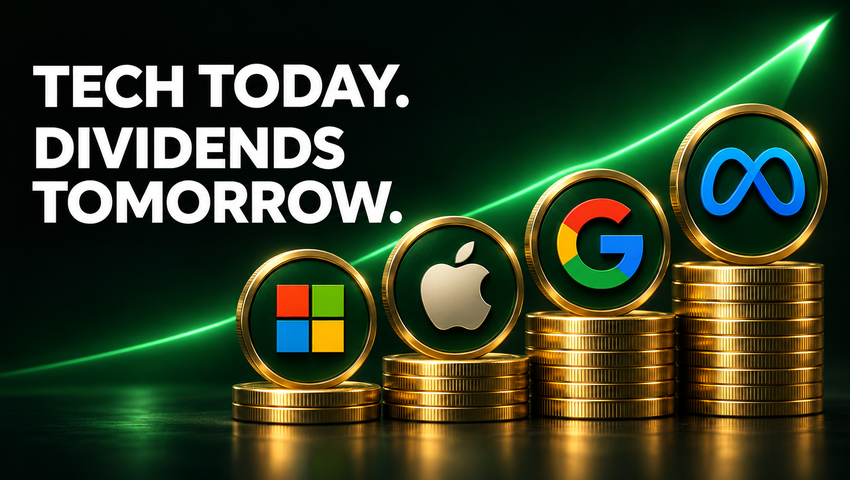
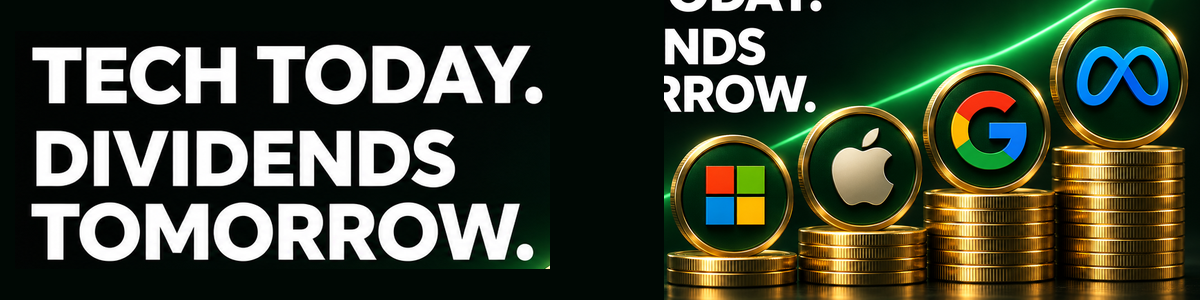
The appeal of companies such as Microsoft, Apple, Alphabet and Meta starts with their underlying businesses.
Software, cloud services, digital advertising and established technology ecosystems can generate substantial cash. The dividend opportunity depends on how much of that cash remains after the companies fund their operations and investments.
That distinction matters. A business can generate enormous operating cash flow while also spending heavily on infrastructure. AI development, data centers and other investments compete with dividends and share repurchases for capital.
For a long-term investor, the opportunity is to own businesses that can continue investing successfully while increasing the cash available to shareholders.
If those investments produce durable earnings growth, a modest dividend today could have considerable room to grow.
A company’s priorities often evolve as its business matures.
Earlier in its development, reinvesting cash may offer the best opportunity to create shareholder value. Building products, entering markets and expanding infrastructure can take priority over making distributions.
As the business becomes more established, management may find more room to return cash through dividends and buybacks.
Over the coming decades, some of today’s technology leaders could move further in that direction. Their investment appeal may increasingly include a combination of earnings growth, dividend income and share repurchases.
It’s reasonable to consider that possibility when evaluating them today. It would be a mistake, however, to assume that every growth company will eventually become a dependable dividend payer. Management’s decisions, competitive pressures and future investment needs will determine the outcome.
Consider a hypothetical stock purchased for $100 that pays an annual dividend of $1 per share. Its starting yield is 1%.
If that dividend grew by 8% annually for 25 years, the annual payout would reach approximately $6.85 per share.
That would represent a yield of about 6.85% on the original purchase price, before taxes and without accounting for dividend reinvestment.
This is an illustration, not a forecast for any particular company. Sustaining that growth would require the business to keep supporting the payout.
It also doesn’t mean the stock would yield 6.85% at its future market price. Investors would still need to evaluate its value at that point. The example simply shows how a small starting payout can become more meaningful with time and consistent growth.
A strong business isn’t automatically an attractive investment at any price.
Paying too much can limit returns even when a company continues to perform well. Technology leaders also face competition, regulation and the possibility that expensive investments fail to produce the expected profits.
Dividends are a management decision, too. A company may favor buybacks, acquisitions or additional spending instead of raising its payout. A company that doesn’t currently pay a dividend may remain that way for years.
Concentration is another consideration. Investors who already hold broad market index funds may have substantial exposure to mega-cap tech. Adding individual positions should be a deliberate decision about the overall portfolio.
For younger investors, dividend investing can involve looking well beyond the income available today.
The goal may be to own businesses capable of producing more cash, increasing distributions and becoming more valuable over decades. Some mega-cap technology companies deserve consideration through that lens.
That requires patience and continued attention to fundamentals: free cash flow after capital spending, the sustainability of the payout, competitive strength and valuation.
Today’s highest-yielding stocks won’t necessarily provide the best combination of income and growth over the next 30 years. Some future dividend leaders may still be better known for their growth potential today.
This article is for informational purposes only and does not constitute personalized investment advice. Dividends and investment returns are not guaranteed.


Stay ahead. Daily updates with 27% better returns than S&P 500 with a 54% win rate vs. S&P 500 benchmarks on close to 5,000 picks since inception in 2023.*